The dim glow of a laptop screen illuminated a developer in a cramped room somewhere in Dhaka, the faint hum of a worn fan a counterpoint to the urgent ticking of an approaching deadline. He paused, staring at the spinning wheel of death – a digital manifestation of his stalled progress, his frustration a palpable thing in the humid air. This wasn’t an isolated incident; it’s the suffocating reality for millions globally, a stark illustration of AI’s uneven distribution.
Developers in burgeoning economies often face a trifecta of limitations: unreliable internet, prohibitive API costs, and the sheer expense of commercial AI subscriptions. These aren’t minor inconveniences; they’re insurmountable walls that stifle innovation, effectively locking a vast pool of talent out of the AI-driven revolution. While AI is touted as a great equalizer, its accessibility has, paradoxically, become another advantage for the already advantaged.
The Gemma 4 Revelation
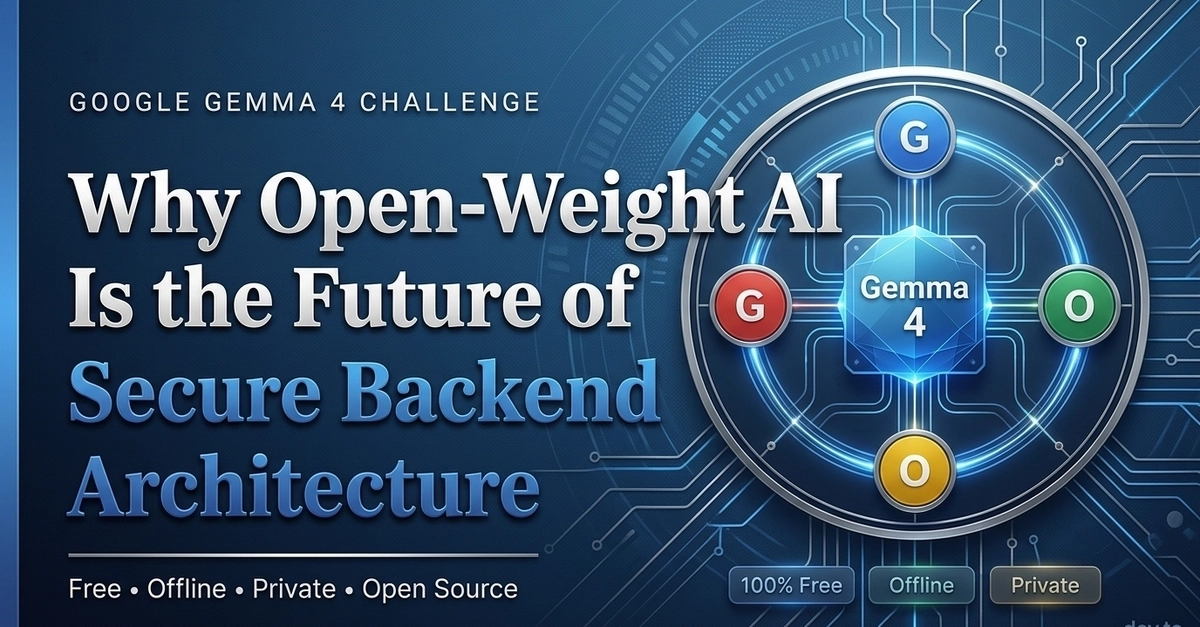
Enter Gemma 4, Google’s ambitious foray into the open-weight AI arena, launched in April 2026. Forget the nebulous cloud and the dreaded per-query bill. Gemma 4 is designed to reside entirely on your machine – a private, offline, and surprisingly potent AI assistant. This isn’t merely another API; it’s a fundamental redefinition of AI deployment. Google’s decision to release the model weights under the Apache 2.0 license is the critical differentiator here. It grants developers unfettered rights to download, tinker with, and even commercialize the core intelligence of these models, all without a price tag.
The family boasts a tiered approach to hardware accessibility, a thoughtful consideration for its target audience:
- E2B: Optimized for mobile and edge devices, requiring a mere 2–4 GB of RAM.
- E4B: The workhorse for standard laptops, striking a balance between processing power and resource demands (4–8 GB RAM).
- 26B: A high-efficiency model employing a Mixture of Experts architecture, suitable for desktops with 16 GB+ RAM.
- 31B: The flagship, engineered for demanding tasks like deep reasoning and complex code generation, necessitating 24 GB+ RAM.
Each of these models operates with a crucial characteristic: 100% offline functionality.
Why ‘Free’ Isn’t a Four-Letter Word Here
The immediate skepticism surrounding any powerful, free technology is understandable. We’ve been conditioned to expect a hidden cost. But with Gemma 4, the economic model is genuinely distinct. Unlike proprietary services that incur massive data center and compute expenses, necessitating subscription fees or per-use charges, Gemma 4 shifts the burden – and the benefit – to the user. Google incurs no server costs for your local usage because you are the server. This is the engine powering its free distribution and the permissive Apache 2.0 license, which explicitly permits commercial application development without royalty strings attached.
To get Gemma 4 humming, you’ll need:
- RAM: A minimum of 8 GB, with 16 GB strongly recommended for optimal performance.
- Storage: Approximately 5–10 GB of free disk space for the model files.
- Processor: Any modern CPU, be it an Apple M-series, Intel i5/i7, or AMD Ryzen, will suffice.
- GPU: While not strictly necessary, a GPU will significantly accelerate response times.
Most laptops manufactured within the last four years comfortably meet these baseline requirements. Even a mid-range machine found in markets across South Asia can handle the E4B model without breaking a sweat.
The Irrevocable Promise of Open Weights
A persistent anxiety among developers is the long-term viability of ‘free’ AI. History is littered with platforms that lured users with generous initial offerings, only to later relegate advanced features behind escalating paywalls. Gemma 4’s underlying architecture and licensing fundamentally disrupt this pattern. The Apache 2.0 license isn’t a temporary concession; it’s a permanent grant of rights. Developers who download Gemma 4 can use, modify, and distribute it indefinitely, for both personal projects and for-profit ventures. Once the model resides on a user’s local machine, it’s beyond the reach of a sudden price hike or a restrictive API limit.
This local, offline ownership stands in stark contrast to cloud-dependent AI systems where the provider dictates:
- Access policies
- Pricing structures
- Usage constraints
- Subscription tiers
With Gemma 4, the developer is the ultimate arbiter of their AI’s destiny. This is particularly impactful for a demographic often overlooked in high-level AI strategy discussions: students, bootstrapped startups, independent creators, educational institutions, and, of course, developers in economically constrained regions.
“The model weights are ours. They’re local. They’re offline. Google can’t remotely decide to throttle my usage or double the price of my research when I’m half a world away.”
This quote, echoing sentiments from early Gemma 4 adopters, captures the profound liberation offered by such an open model. It’s not just about cost savings; it’s about control and autonomy.
Why This Matters for Backend Architecture
For backend development, the implications are immense. Traditionally, integrating AI capabilities into applications meant relying on third-party APIs. This introduced dependencies, potential single points of failure, and cost escalations tied to usage. With Gemma 4, developers can embed sophisticated AI logic directly into their backend services, running it on local infrastructure or dedicated on-premises servers. This offers several compelling advantages:
- Enhanced Security and Privacy: Sensitive data never leaves the user’s environment, a critical factor for many enterprise applications and regulated industries. No more sending proprietary customer data to a third-party cloud for processing.
- Reduced Latency: Processing AI tasks locally eliminates network round-trips, leading to snappier application performance.
- Cost Predictability: Once the hardware is in place, the operational cost of running Gemma 4 is negligible compared to API call charges, especially for high-volume applications.
- Customization and Fine-Tuning: The open weights allow for deep customization, enabling developers to fine-tune models for highly specific domain tasks—a level of control rarely afforded by closed APIs.
This shift moves AI from a costly, external service to an intrinsic, programmable component of the backend architecture. It democratizes the ability to build intelligent applications, lowering the barrier to entry for even complex AI-driven features.
The ‘Pakistan Effect’ and Beyond
While the original announcement highlighted developers in Pakistan, the ‘Gemma 4 Effect’ will ripple far beyond South Asia. Consider developers in Brazil struggling with fluctuating internet, or those in Eastern Europe looking to build AI-powered tools without international payment hurdles. The ability to run sophisticated AI models offline on commodity hardware fundamentally alters the economics of software development globally. It empowers individuals and small teams to compete on innovation, not on cloud budgets.
This isn’t just about access; it’s about fostering a more diverse and resilient AI ecosystem. An ecosystem where brilliant minds, regardless of their geographical or economic circumstances, can contribute to building the future.
🧬 Related Insights
- Read more: Backend and DevOps: AI’s 25-Year Symphony from Code to Cosmic Orchestration
- Read more: Memo: Coding in a World That Forgets After 12 Lines
Frequently Asked Questions
What does Gemma 4 actually do? Gemma 4 is a family of open-weight AI models released by Google that can be downloaded and run entirely offline on your own computer, enabling tasks like text generation, coding assistance, and complex reasoning without an internet connection or subscription fees.
Will Gemma 4 be permanently free? Yes, due to its open-weight nature and the permissive Apache 2.0 license, developers can use, modify, and distribute Gemma 4 models indefinitely for both personal and commercial purposes without ongoing costs from Google.
Can I build a commercial product with Gemma 4? Absolutely. The Apache 2.0 license explicitly allows for commercial use, meaning you can build and sell products powered by Gemma 4 without needing to pay licensing fees or royalties to Google.