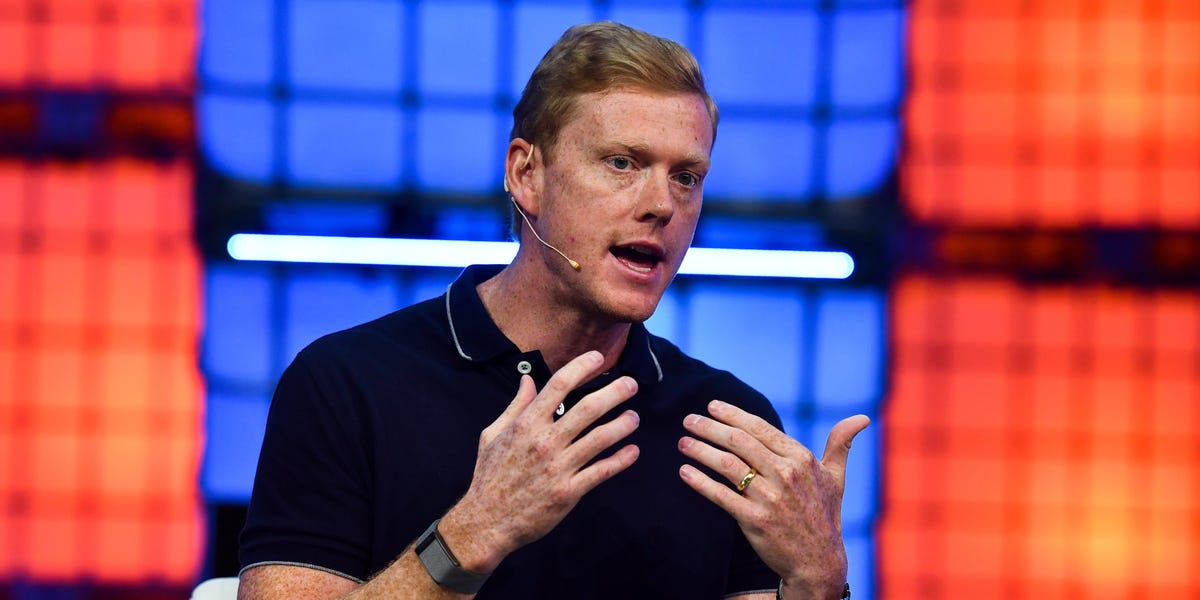
It’s a dizzying spiral. Andrew Macdonald, Uber’s COO, dropped a small bombshell over the weekend, essentially admitting the company is struggling to prove the ROI on its AI investments. He spoke to Rapid Response, noting that the link between increased AI token usage and a proportional increase in useful consumer features is, well, not there yet. Think about that. Millions poured into AI, and the direct line to customer value is fuzzy at best.
This isn’t some fringe opinion; it’s the sentiment echoing from the highest levels of engineering. Macdonald recalled a viral comment from Uber CTO Praveen Neppalli Naga, who apparently blew through the company’s 2026 Claude Code budget by April. That single remark — a seemingly casual admission of extreme token consumption — reportedly sent shockwaves through the organization. A “head-exploding moment,” Macdonald called it. And here’s the kicker: the ensuing discussions revealed that higher token counts didn’t map cleanly to shipping more valuable features for riders and drivers. “That link is not there yet, right?” Macdonald stated plainly. “I think maybe implicitly there is more that is getting shipped, but it’s very hard to draw a line between one of those stats and, ‘Okay, now we’re actually producing 25% more useful consumer features.’”
The Cost of the AI Gold Rush
The implications are significant. Macdonald stressed that these trade-offs become much harder to stomach when you can’t demonstrate clear value. This directly impacts strategic decisions. Earlier this month, CEO Dara Khosrowshahi confirmed Uber was indeed slowing hiring to manage its substantial AI outlays. It’s a stark indicator that the AI gold rush might be hitting some serious headwinds, at least on the justification front.
And that’s the thing about AI for businesses. As Macdonald pointed out, it can feel free from a user’s perspective. You can dream up all sorts of wild use cases, pushing the model to its limits. But for the company, the meter is always running. The bill for every token, every API call, lands squarely on the P&L. This contrasts sharply with the internal push in some tech circles to measure employee productivity by their AI output. It’s a strategy that risks conflating activity with actual achievement.
Is Tokenmaxxing Losing Its Shine?
Uber isn’t the only one feeling this pinch. The Big Tech world has been heavily invested in what’s often called “tokenmaxxing”— a relentless drive to use AI as much as possible, often evaluated by internal metrics. But the tide might be turning. Duolingo, for example, recently walked back its own initiative to incorporate AI usage into performance reviews. Their CEO, Luis von Ahn, admitted that employees were questioning whether they had to use AI even when it wasn’t the best tool for the job. His reasoning? “It felt like, rather than being held accountable for the actual outcome, we were trying to just push something that in some cases did not fit.” A remarkably candid admission that resonates with Macdonald’s own observations at Uber.
This suggests a crucial shift is underway. The initial euphoria around generative AI, the boundless enthusiasm for its potential, is giving way to a more sober, data-driven assessment. Companies are realizing that simply consuming tokens isn’t the same as innovating. The real challenge lies in integrating AI in ways that genuinely enhance user experience, streamline operations, or create entirely new revenue streams. Without that clear, demonstrable link, the immense costs associated with AI token consumption become increasingly difficult to defend. It’s a sobering thought for an industry that has, until now, largely operated under the assumption that more AI usage automatically equates to more business value. My own historical parallel for this is the dot-com bubble: early excitement, massive investment, and then a brutal but necessary correction based on real-world financial performance. We might be seeing an AI-specific iteration of that cycle.
And frankly, this is exactly what DevTools Feed has been tracking. The industry’s honeymoon with AI isn’t over, but the “pay-no-mind-to-the-bill” phase certainly appears to be. The focus is now shifting, as it always should, to measurable outcomes. Companies that can effectively use AI to drive tangible business results will thrive. Those that can’t, and simply chase AI usage metrics? They’re going to find themselves in Macdonald’s unenviable position.
🧬 Related Insights
- Read more: Deno Deploy Goes GA: Zero-Config Magic or Just Hype?
- Read more: Cloudflare’s Organizations: 133K Lines of Code to Conquer Enterprise Account Hell
Frequently Asked Questions
What does ‘AI tokenmaxxing’ mean? ‘AI tokenmaxxing’ refers to the practice of maximizing the use of AI, particularly large language models, often measured by the consumption of API tokens, with the implicit assumption that higher usage leads to greater innovation or productivity.
Will this mean Uber cuts AI development? It’s more likely that Uber will refine its AI strategy, focusing on use cases that demonstrate a clear return on investment rather than broadly increasing token consumption. Development will probably continue, but with a much stricter focus on efficiency and demonstrable value.
Is this a sign that AI adoption is slowing down industry-wide? While Uber’s COO highlights a challenge with justifying AI costs, it’s not necessarily a sign of industry-wide deceleration. Rather, it indicates a maturing phase where companies are moving beyond initial adoption to optimizing AI integration for profitability and demonstrable impact.