The cursor blinks on an empty IDE screen, a vast expanse of potential waiting to be shaped. Suddenly, the familiar hum of Spring Boot whispers in the background, promising a structured path forward.
This isn’t just about typing code; it’s about building with intent. We’re talking about Spring Boot’s MVC architecture, and frankly, it’s less of a design pattern and more of a fundamental platform shift for how we construct web applications. It’s like moving from a chaotic garage sale of components to a meticulously organized, state-of-the-art workshop. Everything has its place, and the workflow is, dare I say, joyful.
Let’s break it down. MVC, as you likely know, stands for Model, View, Controller. Simple enough on the surface, right? But the magic lies in the separation of concerns. Imagine trying to build a skyscraper by welding plumbing pipes directly into the steel beams, while simultaneously painting the facade. Madness! MVC slaps a sanity check on that chaos. It’s the difference between a Rube Goldberg machine and a finely tuned Swiss watch.
Why bother? Because without it, you get spaghetti code. Everywhere. Your business logic is entangled with your user interface, which is buried under database queries. Debugging becomes an archaeological dig through layers of interconnected mess. Spring Boot’s MVC, on the other hand, gifts you clarity.
✔ Code becomes clean and organized — a breath of fresh air. ✔ Maintenance and debugging transform from a chore into a manageable task. ✔ Team development flourishes, as different members can work on distinct components without treading on each other’s toes. ✔ You unlock the power of reusable components, building blocks for future projects.
The Three Pillars of Spring Boot MVC
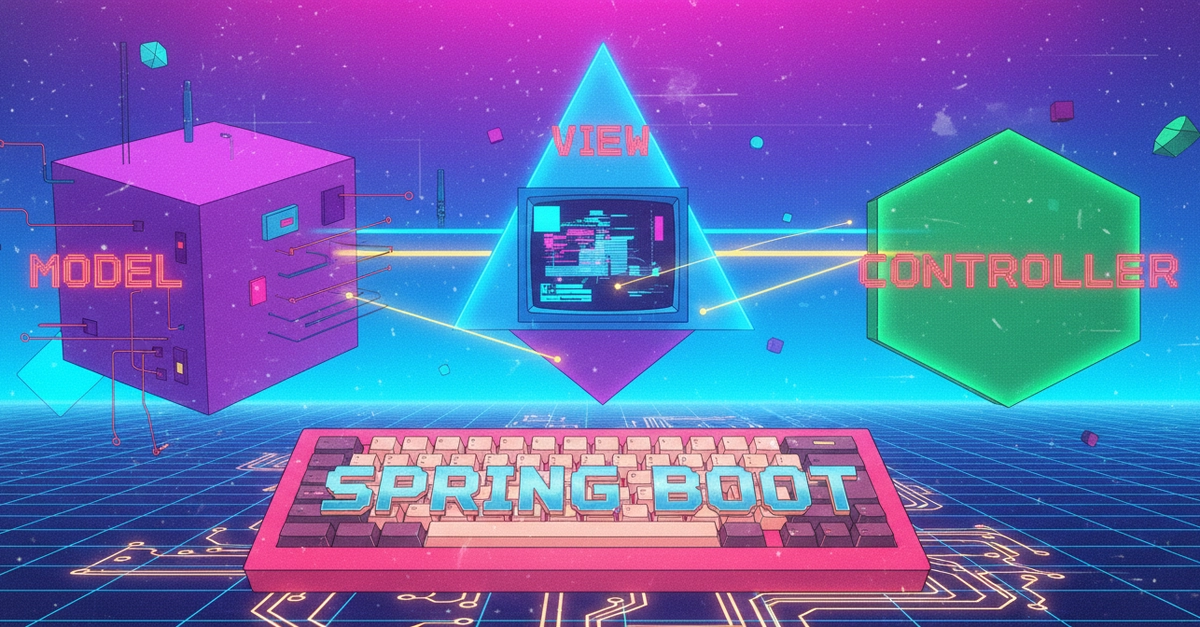
At its heart, MVC is a triumvirate. Each component plays a critical, yet distinct, role.
1. The Model: The Brains of the Operation
This is where your data lives and breathes, and where your business logic executes. Think of it as the engine room. It’s not concerned with how data looks, or how requests arrive; it’s solely focused on managing the application’s state and performing its core functions. In Spring Boot, this often translates to your entity classes and your database interaction logic.
```java class Student { int id; String name; }
This little snippet? It's not *what* you see, nor *how* you ask for it. It's simply the *data* itself, pure and unadulterated.

**2. The View: The Pretty Face**

This is what your users interact with, the visual layer. Whether it's a sleek HTML page, a dynamic JSP, or a modern Thymeleaf template, the View's job is solely presentation. It takes the data provided to it and renders it for human consumption.

```html
<h1>Welcome Student</h1>
<p th:text="${name}"></p>
See how the <p> tag directly uses a variable (name) that would be supplied by the backend? The View is happy to display it; it doesn’t know or care where name came from, or what it represents beyond a piece of text.
3. The Controller: The Maestro
And then there’s the Controller. This is the conductor, the traffic cop, the liaison. It intercepts incoming requests, figures out what needs to be done, talks to the Model to get or update data, and then selects the appropriate View to display the results. It’s the crucial glue that holds the symphony together.
@RestController
public class StudentController {
    @GetMapping("/student")
    public String getStudent() {
        return "Hello Student";
    }
}
This little @RestController is the gatekeeper for the /student URL. When a request hits it, it orchestrates the response. It’s the intermediary, ensuring smooth communication between the user’s request, the data, and the final presentation.
Is This Just a Pattern, or a Paradigm Shift?
Here’s the thing. While MVC has been around for ages, its implementation within a framework like Spring Boot, coupled with the rise of AI-assisted development and microservices, elevates it beyond mere pattern. It’s becoming the de facto standard for building scalable, maintainable, and rapidly deployable web services. The ability to isolate components means that as AI tools become more sophisticated, they can more easily contribute to specific parts of the application—say, optimizing the Model’s data access or generating new View templates—without destabilizing the entire system. This isn’t just about cleaner code; it’s about building systems that can adapt and grow at an unprecedented pace.
Why Does Spring Boot MVC Matter for Developers Today?
Because the world is moving too fast for tangled code. Businesses demand agility, and developers need tools that enable rapid iteration. Spring Boot MVC provides that foundation. It’s the architectural bedrock that allows teams to collaborate effectively, integrate new technologies, and respond to market changes with speed and confidence. Think of it as building with LEGOs instead of trying to sculpt from a single block of granite. The ability to swap out pieces, add new ones, and rearrange existing structures is the key to modern development velocity.
This separation isn’t just academic; it’s practical. When a bug surfaces in your UI, you know to look at the View. When there’s a performance issue with data retrieval, you focus on the Model. The Controller acts as the central hub for debugging request flows. It’s an elegant division of labor that makes complex applications manageable.
**
🧬 Related Insights
- Read more: .NET Logging’s Zero-Alloc Hero: Source Gen Crushes the Competition
- Read more: sbatch: The Invisible Orchestration Engine
Frequently Asked Questions**
What is the primary benefit of using Spring Boot MVC?
The primary benefit is the clear separation of concerns, leading to more organized, maintainable, and scalable web applications. This makes debugging easier and supports collaborative development.
Can I use different View technologies with Spring Boot MVC?
Yes, Spring Boot MVC is flexible and supports various view technologies like Thymeleaf, JSP, FreeMarker, and even plain HTML, allowing you to choose the best fit for your project’s needs.
Does Spring Boot automatically enforce MVC?
While Spring Boot is opinionated and provides excellent defaults and integrations for MVC, it’s ultimately up to the developer to structure their application according to the MVC pattern. Spring Boot makes it significantly easier to implement and manage this structure effectively.