Are you still treating your AI agents like glorified Python scripts? Good. Because that’s precisely why so many AI projects sputter out once they hit the real world.
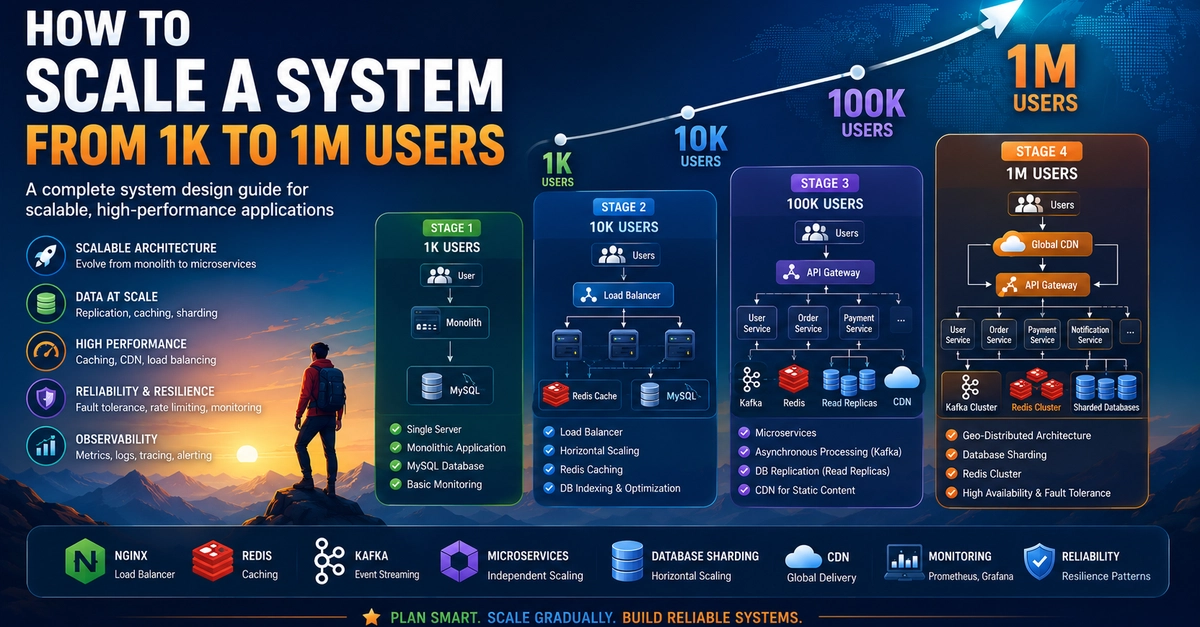
The notion of a single-process agent, managing reasoning, tool calls, memory, and output all under one roof, feels elegant in a Jupyter notebook. But then reality bites: one sluggish tool call gums up the entire inference loop, a lone LLM API hiccup brings the whole show crashing down, and scaling becomes a tangled mess where you can’t independently boost search capacity without, say, over-provisioning your summarization capabilities. It’s a recipe for disaster, a classic case of prototyping optimism crashing headlong into production-grade demands.
The Case for Distributed Intelligence
This isn’t a new problem for software engineering; it’s just a new flavor of it with AI. The microservices revolution in web development aimed to solve these exact pain points: breaking down monolithic applications into independently deployable, scalable, and observable units. Now, that paradigm is arriving, with considerable force, for AI agents.
Imagine, instead, a world where each autonomous capability is its own service. Each with its own API surface – think FastAPI or gRPC. Each boasting its own health checks and readiness probes. Each holding its own distinct memory scope, free from shared in-process RAM anxiety. Each resolving tool bindings dynamically from a central registry, and crucially, each boasting its own observability stack – distributed traces, metrics, and structured logs. This is the essence of the ‘micro agent’ approach.
A micro agent, at its core, is a bounded autonomous service. It takes a task – a prompt, context, session ID – via an API call. It then executes a plan → act → observe loop, powered by an LLM. It calls tools via that aforementioned centralized registry, stores and retrieves conversation state from an external memory store, and crucially, returns a typed result or fires off an event to downstream consumers. The key takeaway here? A micro agent isn’t a ‘smart function’; it’s a service, complete with its own API contract, memory boundaries, failure modes, and an explicit Service Level Agreement (SLA).
Deconstructing the Micro Agent Architecture
The guiding principle is clear: each agent should own a single reasoning domain. This separation of concerns is vital. The LLM inference step itself must be stateless. Any notion of conversation history residing in in-process RAM between requests is anathema. Memory belongs in external stores, period.
When it comes to tooling, things get interesting. Every tool your agent might invoke needs a JSON Schema definition. This definition gets published to a shared Tool Registry. No more ad-hoc function signatures; this rigorous approach enables runtime input validation before an LLM’s output even hits your backend services, facilitates auto-generated documentation, and crucially supports tool versioning with built-in backward compatibility checks.
And what about state-modifying tools – the ones that send emails, write to databases, or trigger webhooks? These must be idempotent. Strategies like passing Idempotency-Key headers at the HTTP layer or employing message deduplication at the queue level (Kafka’s exactly-once semantics are a godsend here) are your best friends. The tool handlers themselves must be designed to be safe to retry. Think check-then-act patterns; a simple, yet powerful, defense against transient failures.
For those ambitious, multi-step agent tasks – think deep research dives or code generation followed by execution – synchronous HTTP with long timeouts is the enemy. Async task queues, using systems like Kafka or BullMQ, are the way forward. The flow becomes Client ──► POST /tasks ──► Kafka/BullMQ ──► AgentWorker, with the client polling status via GET /tasks/{id} against a system like Redis, or optionally receiving push updates via WebSocket/SSE.
Managing context is another critical battleground. Each agent invocation should deal with a bounded context packet. Never let those message histories grow unbounded. A dedicated ContextManager service can handle the compression and summarization required before injecting context into the LLM prompt, keeping token budgets in check and latency manageable.
From Blueprint to Kubernetes Deployment
The practical implementation sees each agent as a containerized FastAPI or gRPC service. The canonical structure is well-defined: a core agent directory housing the AgentRunner (the plan → act → observe loop), prompt definitions, memory management, tool bindings, and Pydantic schemas for all I/O. An API directory handles routes for task submission (/run for sync, /tasks for async), status polling (/tasks/{task_id}), and essential health checks (/health, /ready, /metrics).
Every agent service needs to expose a minimum set of HTTP endpoints: POST /run for short, synchronous tasks; POST /tasks for asynchronous operations returning a task ID; GET /tasks/{task_id} to poll for status and results; GET /health as a liveness probe; GET /ready to check critical dependencies like LLM connectivity and memory stores; and GET /metrics for Prometheus integration.
Scalability and the Kubernetes Reality
Deploying these micro agents on Kubernetes is the logical next step. Kubernetes provides the orchestration, auto-scaling (Horizontal Pod Autoscaler - HPA), and declarative management needed for such distributed systems. Service definitions, deployments, and config maps are standard fare for each agent. Scaling strategies naturally align with Kubernetes’s strengths: adjusting replica counts based on CPU/memory usage or custom metrics, ensuring you can dynamically match capacity to demand.
Fault tolerance and retry strategies are woven into the fabric of this architecture. Kubernetes itself offers mechanisms for restarting failed pods, but more importantly, the design of the micro agents with idempotent operations and strong error handling at the service level builds in resilience. Distributed tracing, facilitated by OpenTelemetry, becomes indispensable for debugging across these myriad services. You can trace a single user request as it hops between various agent microservices, identifying bottlenecks or failure points with precision.
The Human Element: Testing and CI/CD
Testing agent microservices requires a multi-pronged approach: unit tests for individual components, integration tests to verify service interactions, and end-to-end tests that simulate user workflows. Mocking external services like LLMs and memory stores is crucial for isolated testing.
A well-oiled CI/CD pipeline is non-negotiable. Each agent service should have its own pipeline, triggered by code commits, running tests, building container images, and deploying to staging or production environments. This allows for rapid iteration and reduces the blast radius of any single deployment failure. The ability to roll back quickly is paramount.
Cost Management: A Shadowy Concern
One of the more insidious challenges in production AI is cost management. In a monolithic system, attributing LLM API costs to specific agent functions is difficult. With micro agents, this becomes significantly easier. Each agent service has its own LLM client configuration, and by instrumenting calls with cost-related metadata, you can map token usage directly back to specific agent functionalities and even individual user sessions. The original article touches on cost management & token budgeting, and this is where the microservices approach truly shines. Independent cost attribution isn’t just good for accounting; it’s essential for optimizing expensive LLM calls and identifying areas for efficiency gains.
The Production Readiness Checklist: A Non-Negotiable Tool
Before declaring your micro agent system ‘production-ready,’ a thorough checklist is essential. This includes:
- Observability: Are traces, logs, and metrics comprehensive and actionable?
- Scalability: Can the system handle anticipated load and spikes?
- Fault Tolerance: What happens when individual services fail? Is there graceful degradation or automatic recovery?
- Security: Are authentication, authorization, and data privacy handled correctly?
- Monitoring: Are alerts configured for critical failures or performance degradation?
- Cost Controls: Are token budgets and API rate limits enforced?
- Deployment Granularity: Can individual agent features be updated or rolled back independently?
This meticulous approach transforms AI agents from experimental toys into strong, enterprise-grade components. It’s the difference between a cool demo and a system that can reliably serve users at scale, day in and day out. Ignoring this architectural shift is akin to building a skyscraper on a foundation of sand.
A Shift in Mindset
Ultimately, building production-grade AI agent systems using microservices isn’t just about adopting new technologies; it’s about embracing a mature software engineering discipline. It’s about understanding that the complexity of AI demands a distributed, observable, and resilient architecture. The systems described here, leveraging technologies like FastAPI, gRPC, Kafka, and Kubernetes, are not merely academic exercises; they represent the practical pathway to building AI that is as dependable as it is intelligent.
Here’s the thing: the companies that crack this nut will be the ones defining the next generation of AI-powered products. Those that don’t, well, they’ll likely remain stuck in the prototype phase, watching their competitors build actual, scalable, reliable AI applications.
Why Does This Matter for Developers?
This microservices approach to AI agents fundamentally changes how developers will build and maintain AI-powered applications. Instead of monolithic codebases where a change to one part can have unforeseen consequences elsewhere, developers will work with smaller, more manageable services. Each service has a clear API contract, making integration easier and more predictable. Debugging becomes more localized – instead of sifting through thousands of lines of a single process, you can focus on the specific micro agent service experiencing issues. Furthermore, it opens up opportunities for specialization, where teams can focus on developing and optimizing individual agent capabilities. This aligns with modern DevOps practices, where independent deployment and scaling are key to agility and reliability.
Is This Just Another Hype Cycle for AI Architecture?
While the term ‘microservices’ has been around for years, its application to AI agents signifies a maturing of the field. Prototypes often mask underlying architectural weaknesses that become glaringly apparent under production load. The pain points listed – latency coupling, unscalable compute, blast radius issues – are not theoretical; they are the predictable failure modes of monolithic AI systems. The proposed micro agent architecture directly addresses these issues with established patterns from distributed systems engineering. It’s less about a new hype cycle and more about applying proven architectural principles to a new and complex domain, aiming for the same kind of production readiness we expect from traditional web services.
🧬 Related Insights
- Read more: RBAC is Dead, Long Live ABAC: Permissions Beyond Roles [Analysis]
- Read more: Deno Sandbox: Secure LLM Code Without the Hack Nightmare
Frequently Asked Questions
What is a micro agent in AI?
A micro agent is a bounded autonomous service designed to perform a specific reasoning task. It acts as an independent component within a larger AI system, with its own API, memory scope, and failure modes, contributing to overall system resilience and scalability.
Why is a single-process agent bad for production?
Single-process agents suffer from latency coupling (slow tools block everything), unscalable compute (can’t scale parts independently), a large blast radius (one failure takes down the whole system), zero deployment granularity (updates require redeploying everything), and difficulty in cost attribution.
What are the key technologies for building micro agents?
Key technologies include Python frameworks like FastAPI or gRPC for service APIs, Kafka or similar for asynchronous task queues, external stores for memory (like Redis or databases), a Tool Registry for managing tool definitions, and Kubernetes for orchestration and deployment, all integrated with observability tools like OpenTelemetry.