Terraform Secrets: The State File Trap No One Talks About
You're knee-deep in Terraform, spinning up AWS resources, when bam—a database password slips into your state file. Here's how to lock that down for good.
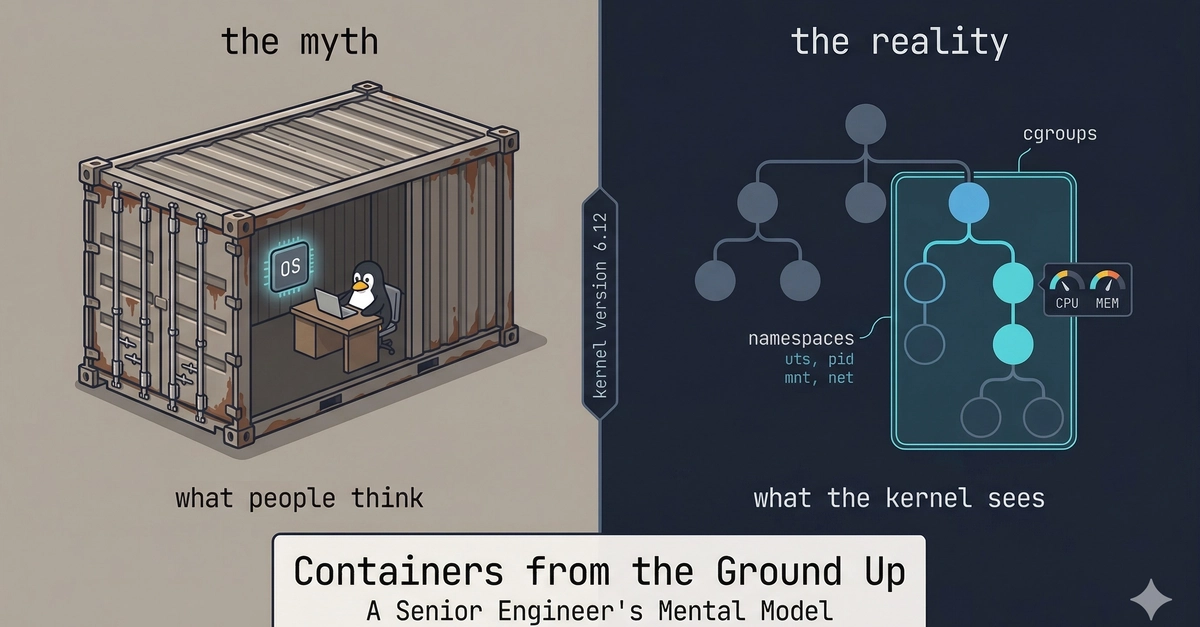
Forget bundled dependencies. Containers are kernel processes tricked into isolation. This OS truth changes how you debug and deploy.
Everyone's chased that ghost: code that runs fine locally but crumbles elsewhere. Docker for beginners flips the script, turning dev chaos into smooth, portable shipping.
Picture this: one command, typed in under a minute, flips a low-priv user into god-mode admin. OpenClaw CVE-2026-33579 exposed 85,000+ instances to instant takeover.
Tired of rooting your phone for Linux tinkering? Podroid boots an Alpine VM with Podman in 20 seconds flat — no root, no fuss. But is it a dev game-changer or just a geek toy?
Windows devs are starving for SSD space. Running WSL on an external drive delivers portability—but at what cost to your workflow?
Your Puppeteer bot runs fine for 10 minutes, then balloons to 2GB and gets OOM-killed. Sound familiar? Time to profile like a pro, not guess.
Staring at a lonely MicroK8s cluster on my Mac Studio, I hit delete. What followed was a bare-metal odyssey to true HA Kubernetes glory — or homelab madness.
Your Docker container spins up fine locally. Then prod explodes. Here's the dependency trap everyone's ignoring.
You've hit deploy. Slack's silent. Is it bliss or impending doom? After 20 years watching tech's release nightmares, I've seen the pattern: tools promise utopia, discipline delivers sanity.
Picture this: your app's humming in staging, but production starts eating events alive. Silent caching strikes again, serving ghost 200s while your business bleeds.
Platform engineers at KubeCon hear Vultr's bold pitch: Nvidia-fueled AI infrastructure that's half to a tenth the hyperscaler price. But it's the 'skill files' — AI-trained blueprints — that make the real magic.