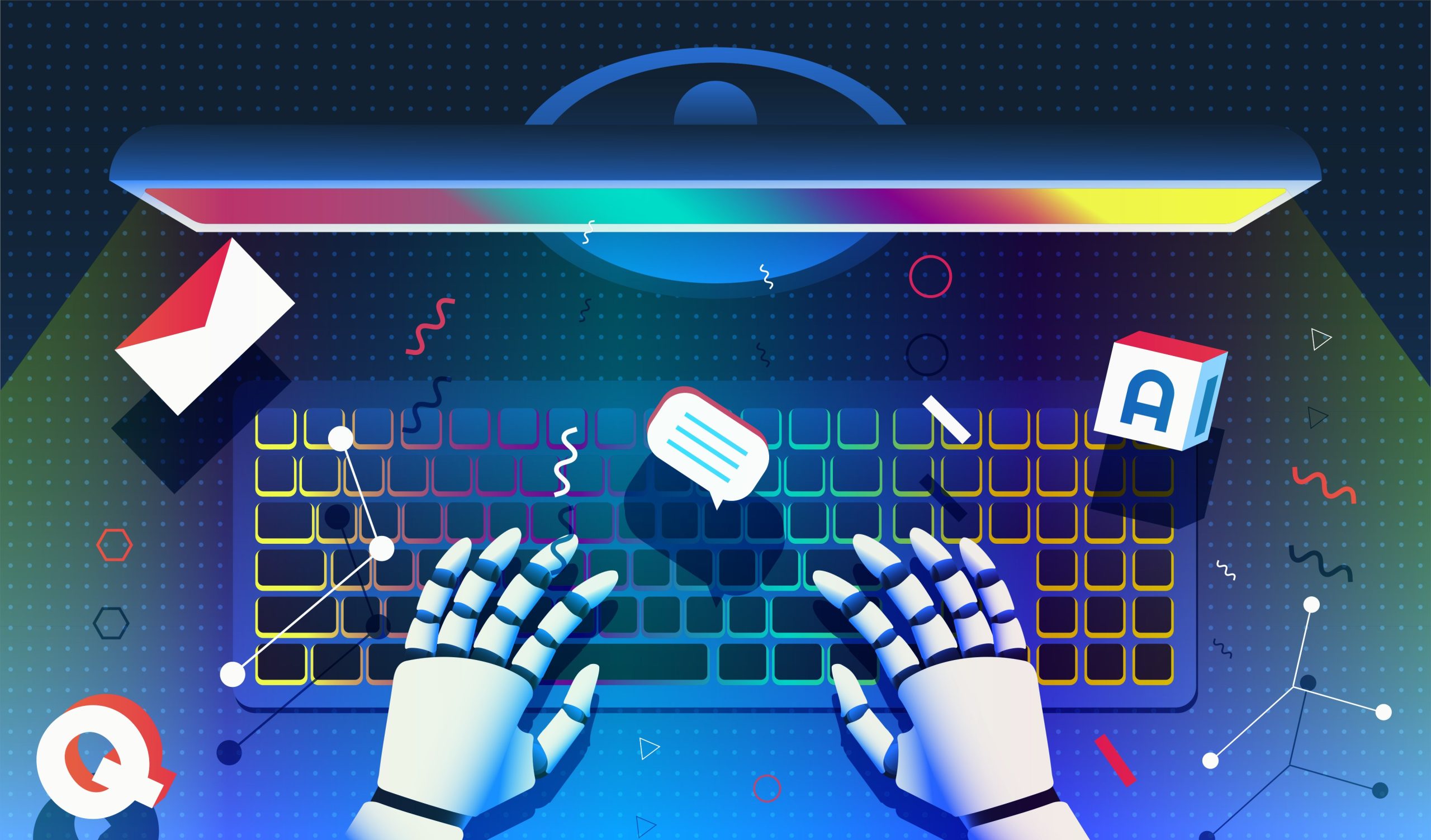
This isn’t just about smarter autofill anymore. We’re witnessing a fundamental rewrite of how software is conceived, built, and maintained. When we talk about AI coding tools like Anthropic’s Claude Code hitting a billion dollars in annual revenue in just six months, what that really means is that entire enterprises are betting their future on silicon brains writing their digital DNA. This isn’t a minor tweak; it’s a platform shift, the kind that reshapes industries and demands a completely new way of thinking. But as with all seismic shifts, there’s a dizzying undercurrent of risk.
The numbers themselves read like a fever dream. Claude Code, a tool that supposedly crafts and executes code autonomously right from your terminal, has gobbled up over half the enterprise coding market. OpenAI’s offerings are nipping at its heels. It’s like watching a meteor shower of productivity gains. Developers are offloading mind-numbing tasks, accelerating feature delivery, and seemingly unlocking new levels of creative output. This isn’t just incremental improvement; it feels like a leap across a chasm.
But peel back that gleaming revenue layer, and you’ll find a darker reality. Veracode’s latest report screams that nearly half of all AI-generated code is riddled with security holes. Yes, security vulnerabilities. GitClear paints a grim picture of duplicated code blocks skyrocketing eightfold since these AI assistants became mainstream — we’re essentially building future technical debt at warp speed. And the kicker? A METR study revealed that experienced developers, when armed with these cutting-edge AI tools, actually lost 19% of their efficiency compared to those coding the old-fashioned way. Nineteen percent! It’s like giving a Formula 1 driver a unicycle.
This is the essential tension. The power is undeniable. The adoption is breathtakingly swift. Yet, the problems are not just appearing; they’re compounding, faster than most organizations can even comprehend. The burning question for every CTO and engineering lead isn’t if they should adopt these tools, but how they can possibly build the governance, the rigorous review processes, and the incident response capabilities to handle the inevitable fallout before the liabilities buried in that AI-generated code start to bury them.
Anthropic’s dominance, specifically with Claude Code, isn’t accidental. It’s the result of an engineered ecosystem, a series of interlocking advantages that create a virtuous cycle — a compounding network effect that competitors are scrambling to unravel.
At the heart of Claude Code’s architecture lies what Anthropic terms “agentic operation.” Forget simple autocomplete; this is different. Unlike tools that merely suggest snippets as you type, Claude Code operates as a truly autonomous agent. It can map out multi-step tasks, execute complex shell commands, rewrite entire swathes of files simultaneously, and crucially, maintain a holistic understanding of an entire repository’s structure. The September 2025 release of Claude Code 2.0 introduced a game-changing checkpoint system. Imagine an automatic save function for your AI’s every move, preserving code state before any modification. This instills a profound sense of psychological safety, allowing developers to embark on ambitious coding projects knowing that a simple double-tap of the Escape key or a dedicated rewind command can instantly revert to any previous state.
This checkpoint system directly tackles a core anxiety that has been throttling agentic tool adoption across the industry. When an AI agent can touch dozens, even hundreds, of files in a single operation, the potential for catastrophic errors explodes in kind. Anthropic’s ingenious solution acts as a version control system specifically for AI-driven operations, providing the necessary confidence for developers to delegate more aggressively. The granular control over rollbacks – whether to restore code, conversation history, or both – is absolutely essential when trying to untangle why an agent made a particular, and potentially disastrous, decision.
Then there are the subagents. This is another structural advantage that truly sets Claude Code apart from the pack. Instead of cramming every single requirement into a monolithic context window, Claude Code has the agility to spawn specialized sub-processes that can work in parallel on distinct aspects of a larger task. Think of it this way: one subagent might be diligently constructing a backend API while the main agent simultaneously crafts the frontend. Another subagent could be tasked with investigating a tricky technical question, all while the primary agent pushes forward with the core implementation. Each subagent maintains its own context window, finely tuned and optimized for its specific function, thus sidestepping the performance degradation that inevitably occurs when context windows become overloaded and diluted.
The context management challenge has proven far more thorny than even early adopters anticipated. Research has shown that while AI models can perform brilliantly with focused inputs, their performance consistently degrades as context lengthens. Claude models have historically shown lower hallucination rates and a tendency to abstain when uncertain, rather than confidently fabricating incorrect information. Yet, no model is immune to this decay as context piles up. The subagent architecture offers a structural workaround, keeping individual context windows laser-focused and fresh, rather than forcing a single, degrading context to shoulder the entirety of a complex task.
The hooks system is another ingenious piece of the puzzle, enabling automated triggers at specific points within the development workflow. Test suites can be set to run automatically right after code modifications. Linting can execute before any commit is even finalized. Long-running processes, such as development servers, can chug away in the background without bogging down Claude Code’s progress on other critical tasks. These capabilities transform Claude Code from a mere conversational assistant into genuine workflow infrastructure, deeply integrating with existing development practices rather than attempting a disruptive replacement.
Anthropic’s strategy to deploy Claude Code across multiple surfaces is equally savvy. The tool is available natively within terminals for those who thrive on command-line interfaces. Furthermore, a Visual Studio Code extension brings its power directly into the most dominant code editor used by millions of developers globally. And for those entrenched in the JetBrains ecosystem, a plugin provides a similar integrated experience. This multi-surface deployment ensures Claude Code is present wherever developers already live and breathe code, lowering the barrier to entry and accelerating adoption.
The numbers signalled a fundamental shift in how software gets built.
So, what’s the real takeaway here? It’s that the AI coding revolution is here, it’s undeniably powerful, and it’s moving at a speed that is both exhilarating and terrifying. The revenue figures are just the opening act. The real story is in the hidden costs, the accumulating vulnerabilities, and the critical need for organizations to build strong guardrails now. This isn’t just about efficiency; it’s about building secure, maintainable software in an age where the architect might be a machine. The future of coding is agentic, and the companies that can master its governance will be the ones that truly lead.
Why Does This Matter for Developers?
This isn’t just corporate maneuvering; it’s a fundamental shift in the developer experience. Tools like Claude Code are designed to offload repetitive tasks, accelerate debugging, and even suggest architectural patterns. For developers, this means a potential acceleration in their ability to deliver complex features and a chance to focus on more creative and strategic problem-solving. However, it also demands a new skillset: understanding how to effectively prompt AI agents, critically evaluate AI-generated code for security and correctness, and manage the version control complexities introduced by autonomous agents. The role of the developer is evolving from pure code craftsperson to something more akin to an AI conductor, guiding and validating the work of intelligent machines.
Is Anthropic’s Agentic Coding Model Sustainable?
Anthropic’s success with Claude Code, particularly its focus on agentic operation and subagents, suggests a highly sophisticated approach to AI development. The checkpoint system and the ability to spawn specialized sub-processes are clever architectural solutions to common AI challenges like context degradation and the fear of catastrophic errors. These features address core anxieties and build trust, which are crucial for enterprise adoption. If they can continue to innovate in this vein, particularly by improving the security and efficiency of AI-generated code, their market dominance could indeed be sustainable. However, the persistent reports of security vulnerabilities and code bloat across the AI coding landscape are a significant headwind, suggesting that the underlying challenges of AI reliability are far from solved.
🧬 Related Insights
- Read more: Citrix NetScaler’s CVE-2026-3055: Memory Leaks Deja Vu, Now With Exploitation
- Read more: Two Sneaky Bugs That Killed Our Remotion Vercel Sandbox
Frequently Asked Questions What does agentic coding actually mean? Agentic coding refers to AI systems that can autonomously plan, execute, and manage coding tasks without constant human intervention. They operate like independent agents, capable of reading, writing, and executing code to achieve defined goals.
Will AI coding tools replace human developers? While AI coding tools can automate many routine tasks, they are unlikely to replace human developers entirely. Instead, they are transforming the developer role, enabling humans to focus on higher-level design, complex problem-solving, critical review, and creative innovation, while AI handles more repetitive or time-consuming coding aspects.
How do agentic coding tools handle security risks? This is a major concern. While AI can speed up development, reports indicate that AI-generated code often contains security vulnerabilities. Organizations must implement rigorous review processes, security scanning tools, and incident response plans to mitigate these risks effectively. The development of secure AI coding practices is an ongoing and critical area of research and development.