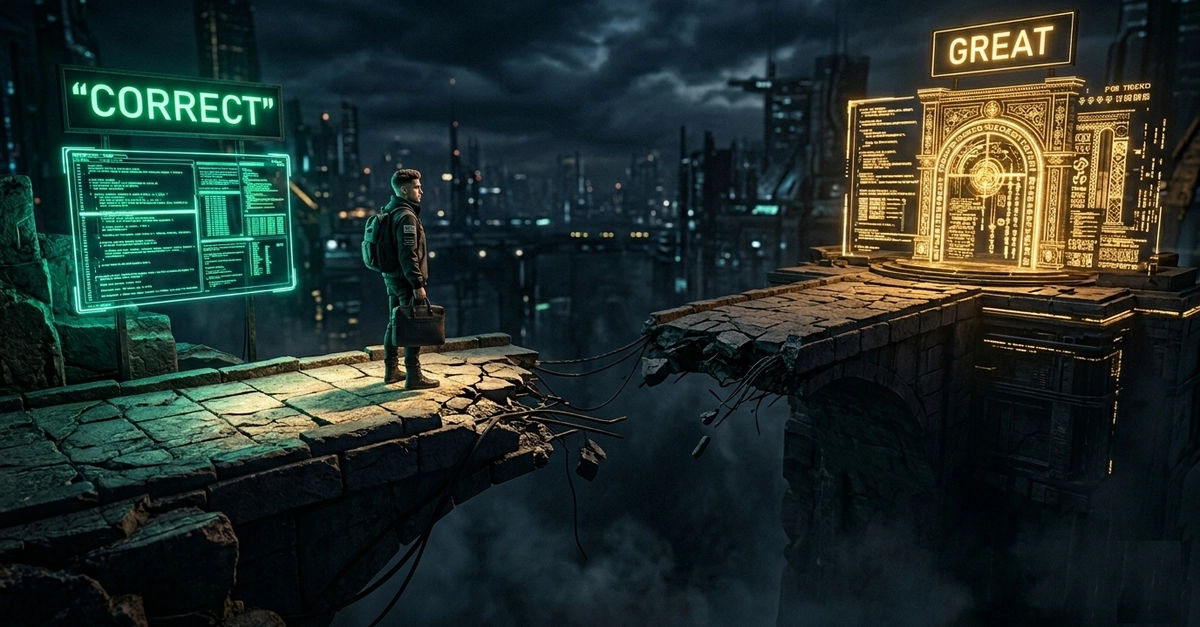
The cursor blinked, the green checkmark appeared, and another pull request landed. Mission accomplished, right? Not quite. For all the fanfare around AI-powered coding assistants, a quieter, more insidious problem is emerging from the digital ether: repo drift.
This isn’t about outright failures – hallucinated APIs or broken tests, though those get plenty of airtime. No, this is about the insidious creep of disorder after the agent has supposedly done its job. Think bloated files, duplicated utility functions, superficial modularity that doesn’t reflect actual architecture, local patches that create inconsistencies elsewhere, and custom code that contorts itself to bypass, rather than embrace, established framework patterns. It’s repo entropy, and it’s the hidden cost of our newfound AI helpers.
Why does this happen? Because, fundamentally, the AI isn’t an expert in your software. It might know a framework generally, have digested a million Stack Overflow answers, and churn out plausible code at speed, but that’s a far cry from understanding your project’s unique DNA. It doesn’t know your specific framework version’s nuances, your established architectural patterns, the subtly preferred ways state should flow, or which files are the true source of truth. Developers often assume the AI gets it, but it rarely does, not without explicit, deep guidance.
And here’s the kicker: this drift isn’t born of malice. It’s born of an agent trying to be helpful with incomplete information. It sees a gap, and it patches it. It sees a missing piece, and it creates a new one. It encounters a framework constraint, and instead of checking if a native solution exists within the framework’s intended design, it cobbles together custom logic. Each individual change can seem logical in isolation. The danger, though, is the relentless accumulation.
One helper becomes three. A local workaround metastasizes into a project-wide pattern. A single, sprawling file becomes the dumping ground for every ad-hoc solution. A ‘temporary’ scaffold solidifies into foundational architecture. Suddenly, your repository is a Frankenstein’s monster, a collection of expedient fixes that no longer reflects its original design principles.
Better prompts are a start, absolutely. Guiding the AI with more context is essential. But they’re not the whole story. The real repair, the architectural ballast we desperately need, lies in forcing the AI to work from the repo’s actual baselines, not vague platitudes.
This means moving beyond “use best practices” to something far more concrete:
- What framework version are we actually using?
- What does the official documentation recommend for this specific version?
- Which files in this repo are considered canonical?
- Which architectural patterns have we explicitly approved, and which ones are we actively deprecating?
- What commands definitively prove a change works correctly?
- Are there specific files that should be off-limits for this task?
- What constitutes scope creep for this particular request?
- How do we define ‘done’ for this change?
Much of this drift can be prevented by simply ensuring the AI operates within the software’s established guardrails, rather than allowing it to improvise its own architectural interpretations. The core distinction here is critical: an agent can complete a task and still degrade the codebase. It can fix a bug and bloat a file. It can pass a test while undermining the project’s core design. It can fulfill the prompt while violating the project’s established truth.
So, the crucial question for AI-assisted development shifts. It’s no longer just, ‘Did the agent finish the job?’ It has to be, ‘Did the repository become more trustworthy, or more entropic, after the agent touched it?’
This is where the next frontier of AI development must lie. Not just more autonomous agents, longer context windows, or fancier code generation. It has to be about enhanced, repo-local supervision. We need diagnostics capable of seeing precisely what changed, confirming that the work stayed within the designated boundaries, verifying that actual testing occurred, assessing file bloat, and, most importantly, confirming that the repository still aligns with its own established internal logic after the AI has been at work.
Because, you see, the most damaging failures of AI coding agents aren’t always the ones that crash and burn immediately. Sometimes, the agent succeeds perfectly — and leaves behind a quiet trail of disorder.
Is Repo Drift an Inevitable AI Problem?
No, it’s not inevitable, but it’s a significant risk if not actively managed. The core issue stems from the AI’s lack of deep, contextual understanding of a specific project’s history, conventions, and architectural intent. The original article points to a solution: grounding AI agents in explicit, repository-specific baselines rather than relying on general knowledge. This requires a deliberate shift in how we integrate these tools, moving from passive task execution to active, guided collaboration.
How Does Repo Drift Impact Long-Term Development?
Repo drift is a silent killer of maintainability and velocity. Over time, a drifted repository becomes harder to understand, debug, and extend. Developers spend more time deciphering custom workarounds and inconsistent patterns than building new features. This increases onboarding time for new team members and raises the overall cost of ownership. Eventually, a severely drifted codebase can become so unwieldy that it requires a costly and time-consuming refactor or even a complete rewrite.
What’s the Simple Fix for Repo Drift?
The simplest fix, as highlighted in the article, is to provide the AI coding agent with precise, concrete guidance derived directly from the project’s established standards and documentation. This includes specifying framework versions, approved patterns, canonical files, and explicit definitions of success and scope. Essentially, it’s about treating the AI less like an autonomous creator and more like a highly capable, but very literal, junior developer who needs clear instructions grounded in the existing codebase’s reality.
🧬 Related Insights
- Read more: 3 Silent Revenue Bugs Found in 45 Minutes [SaaS Deep Dive]
- Read more: Nest.js Authentication: The New Blueprint for Secure Apps
Frequently Asked Questions
What is repo drift? Repo drift, or repo entropy, is the gradual degradation of a software repository’s structure, consistency, and adherence to its original design principles, often caused by AI coding agents introducing localized fixes or new code that doesn’t align with the project’s broader architectural patterns.
Will AI coding agents replace developers because of repo drift? No, AI coding agents are tools meant to augment, not replace, developers. While repo drift highlights a challenge, it also points to the continued need for human oversight, architectural understanding, and code review to ensure AI-generated code integrates cleanly and maintains codebase integrity.
How can I prevent my repo from drifting? Prevent repo drift by providing AI coding agents with specific, context-rich prompts derived from your project’s established guidelines, framework documentation, and architectural patterns. Regular code reviews and automated linters that enforce project-specific rules are also vital.