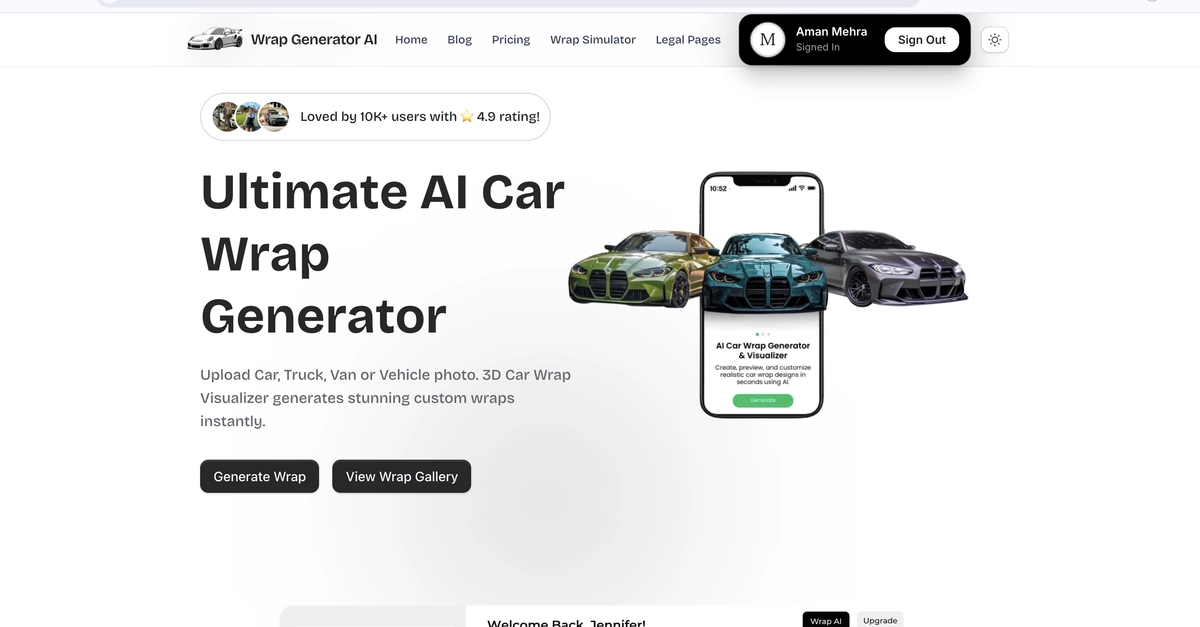
Just a few months ago, a single developer launched Wrap Generator AI, a free tool designed to revolutionize the automotive wrap industry. The platform has since attracted over 4,000 users, facilitated the generation of more than 7,600 unique designs, and, perhaps most surprisingly, begun generating revenue—currently hovering around $200.
This isn’t just another vanity project; it’s a case study in identifying market gaps and leveraging modern web technologies to fill them effectively. The creator’s approach, focusing on a specific niche—Tesla wraps—and employing aggressive SEO strategies, offers a compelling blueprint for other independent developers aiming for both impact and financial viability.
The Problem: Outdated Tools, Frustrated Designers
The core issue the developer identified was a stark contrast between the cutting-edge nature of AI and the stagnant state of vehicle wrap design software. Most existing tools, the creator notes, felt “outdated.” They often relied on clunky APIs, buggy integrations, or, worse, required designers to revert to archaic workflows involving static software like Photoshop, flat templates, and time-consuming rendering processes. There was a clear void for a modern, browser-based 3D experience that allowed for real-time visualization and intuitive customization.
“Most car wrap tools still felt outdated and either have a serious bug problem using APIs from OpenAI or Claude,” the developer states. “Designers were using static softwares like Photoshop, Figma mockups, flat templates, and complicated rendering software just to preview and wrap a simple vehicle.”
The Solution: A 3D, Immersive Experience
Wrap Generator AI’s premise is simple yet powerful: bring the vehicle wrap visualization process into the 21st century. Instead of static mockups and lengthy revision cycles, users get an immersive, fast, and lightweight 3D experience directly in their browser. This allows them to interact with a 3D car model, customize individual parts, test designs instantly, and experiment with AI-generated concepts in real time.
The technical stack is telling: Next.js, React, React Three Fiber, Three.js, MongoDB, NextAuth, and TailwindCSS. The emphasis on React Three Fiber and Three.js underscores the commitment to delivering a high-fidelity, interactive 3D environment within the web browser itself. This wasn’t just about changing colors; it involved complex mesh separation, material control, texture updates, and strong camera interaction—all optimized for performance.
Why Tesla? A Calculated Niche Play
The decision to initially focus specifically on Tesla wraps wasn’t accidental. Tesla vehicles, with their distinct aesthetics and passionate owner base, represent a massive and highly engaged market segment. The developer recognized that this particular niche boasted a substantial online presence and a demonstrable desire for luxury customization, futuristic branding, and unique cyber aesthetics. This targeted approach facilitated not only social media growth and audience positioning but also enabled more precise SEO targeting.
“Tesla content performs extremely well online and majority of the users want a software which helps to wrap their tesla,” the developer explains. This focus allowed for clearer branding and a more defined value proposition from day one.
SEO: The Unsung Hero of Growth
Perhaps the most instructive takeaway for aspiring SaaS builders is the immense power of Search Engine Optimization (SEO), especially in overlooked industries. The developer discovered that the automotive wrap niche suffers from surprisingly weak SEO competition. Many existing websites are poorly optimized, use outdated content, and lack educational resources. By publishing long-form, SEO-driven articles covering topics like car wrap simulators, Tesla wrap design, vehicle visualization, AI-generated wraps, and 3D wrap tools, Wrap Generator AI tapped into a significant source of organic traffic.
This strategic content creation bypassed the need for expensive advertising and built a sustainable growth engine. It’s a reminder that for many technical niches, content marketing and on-page optimization can still yield outsized results.
Early Revenue: Proof of Concept
The initial $200 in revenue, while modest, served as a critical validation point. It demonstrated that users were not only engaging with the tool but were also willing to pay for its capabilities—whether for premium exports, advanced customization features, or simply to support a project they found valuable. This revenue stream, fueled by creators, automotive designers, and enthusiasts, transformed the project from a passion project into a nascent SaaS product.
Lessons Learned: Niche, Visualization, and Simplicity
Several key lessons emerge from Wrap Generator AI’s early success.
First, niche software wins. Building a specialized tool for vehicle wraps created a stronger identity and more focused value proposition than a generic AI offering.
Second, 3D experiences are increasingly accessible. Modern web technologies like Three.js and React Three Fiber are democratizing the creation of sophisticated browser-based 3D applications.
Third, SEO remains a powerhouse, particularly in underserved markets. Strategic content creation can still drive substantial, qualified traffic.
Finally, users crave visualization and interaction. Beyond mere generation, they want immersive, customizable, and previewable design experiences. This indicates a shift away from purely generative tools toward more interactive and user-centric platforms.
The Road Ahead
The developer’s vision extends beyond the current iteration. The roadmap includes transforming Wrap Generator AI into a comprehensive wrap design studio, complete with drag-and-drop decal editing, AI-powered generation, texture uploads, layer systems, and commercial workflow features. The ultimate goal is to establish the platform as the “operating system for vehicle wrap visualization.”
Wrap Generator AI’s journey is a compelling narrative about the potential for independent developers to disrupt established industries by combining technical ingenuity with a deep understanding of user needs and market dynamics. It’s a proof to the enduring power of focus and the strategic application of accessible, cutting-edge technology.