The holographic Jarvis, a staple of science fiction, now feels less like fantasy and more like… a weekend project? That’s the vibe some folks walked away with from Google I/O 2026, after the search giant unfurled its latest AI wares.
Suddenly, everyone’s an AI prodigy. Or so the marketing tells us.
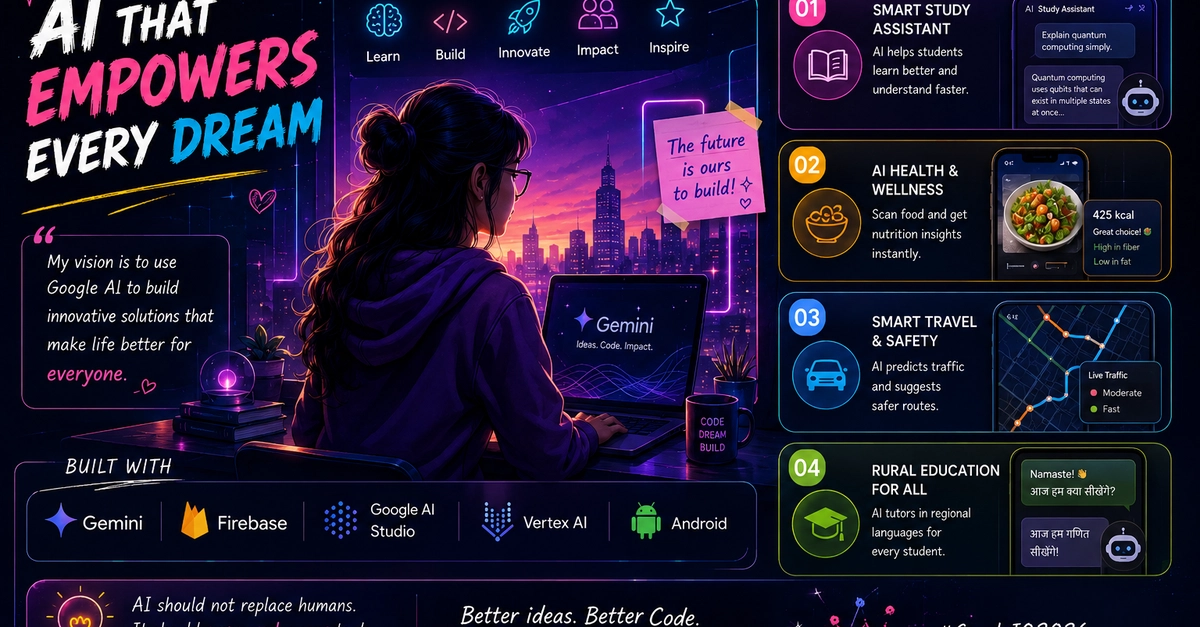
Google’s big show this year wasn’t about some world-ending super-AI (thankfully). It was about democratization. They’re pushing this narrative hard: AI isn’t just for Google’s legions of PhDs anymore. It’s for you, the lone coder in your garage. The student sketching out an app idea. The creator wanting to automate their workflow.
And sure, some of it is genuinely interesting. Tools like Gemma, the Gemini APIs, and the ever-present Google AI Studio are being dangled like low-hanging fruit. They want you to believe that building complex AI isn’t some Herculean task requiring millions in funding and a dedicated server farm. It’s just… code.
This is where my cynicism kicks in. Did you hear that? It’s the sound of a thousand PR departments polishing their accessibility narrative. Because while Google’s announcements sound empowering, the gulf between dabbling and genuinely building something useful—something that doesn’t require a PhD in data science or a budget bigger than a small nation’s GDP—remains vast.
So, You Want to Build Your Own Telugu Jarvis?
One particular thread spun from I/O 2026 centers on building a Telugu AI assistant. A noble goal, no doubt. The idea is to bridge the English-first chasm that AI development so often occupies, especially in regions like India. Millions of students, the narrative goes, are more comfortable with their regional languages. AI should serve them. It should be local, personal, and inclusive. All very commendable.
But let’s be clear: this isn’t a direct result of Google I/O. This is a spark ignited by the perception of accessibility Google is trying to cultivate. The real work, the actual building, still falls squarely on the shoulders of the individual. And that’s where the glossy sheen of Google’s keynote fades.
We are entering a time where even individual developers can create powerful AI experiences.
Can they? Yes. Will it be easy? Absolutely not. The piece touts Python, voice recognition, AI APIs, and text-to-speech as the building blocks. Standard stuff. But the real grunt work—improving Telugu voice recognition (a notoriously thorny problem), wrangling machine learning workflows, managing finicky API integrations, and — oh yeah — actually making conversations feel smooth—that’s where the rubber meets the road. And it’s a long, bumpy road.
The Corporate Soundbite vs. Developer Reality
Google’s message is one of possibility. They want you to feel inspired. To move from “Maybe someday” to “I can start now.” It’s a classic Silicon Valley playbook: make the complex seem simple, package it prettily, and let the community do the heavy lifting. The inspiration is real, yes, but the path to a functional, multilingual AI assistant? It’s paved with debugging sessions and endless Stack Overflow searches, not just catchy keynote phrases.
Think about the history here. Every major tech wave promises to put power in the hands of the little guy. The personal computer. The internet. Open source. And yes, these advancements did democratize many things. But the giants always end up extracting the most value, or setting the terms. AI is following the same pattern, just faster and with more buzzwords.
Is Google genuinely handing over the keys to the AI kingdom? Or are they just selling us the fancy locks and expecting us to forge our own keys? The difference is subtle, and critical.
This isn’t to say the effort isn’t worthwhile. Building an AI that understands and serves a specific regional language is important work. It’s the kind of innovation that actually moves the needle. But let’s not get fooled by the corporate spectacle. The real AI revolution isn’t being televised from a keynote stage; it’s being coded, line by painful line, in countless bedrooms and co-working spaces around the globe. The inspiration might come from I/O, but the execution? That’s entirely on us.
Google’s I/O 2026 did something important: it made the idea of building advanced AI feel less like science fiction. Whether the tools and accessibility they’re touting actually translate to widespread, independent creation of truly impactful AI remains the million-dollar—or perhaps, the billion-parameter—question.
🧬 Related Insights
- Read more: 1000 OpenClaw Deployments: Memory Blackouts Kill the Dream
- Read more: Code Review Best Practices: How to Review Code Effectively
Frequently Asked Questions
What is Gemma? Gemma is a family of lightweight, state-of-the-art open models built by Google. They are designed to be used by developers for a variety of AI tasks.
Will AI replace my job? AI is more likely to change jobs than replace them entirely. New roles will emerge, and existing roles will require new skills, often involving collaboration with AI tools.
Is building an AI assistant realistic for beginners? While powerful AI development is complex, starting with accessible tools and focusing on specific functionalities, like a regional language assistant, is becoming more realistic for motivated beginners.