Submarine radio.
Look, the idea of a submersible warship isn’t exactly new. Think Civil War bathtub torpedoes, barely able to steer themselves. Fast forward a bit, and you’ve got World War I U-boats, actually making a dent. But the real trick, the thing that separated the glorified tin cans from actual threats, wasn’t just hiding underwater. It was trying to talk while submerged.
Here’s the dirty secret the Navy doesn’t like to broadcast: water is, to put it mildly, a terrible medium for radio waves. Especially salty water. It’s dense, it’s conductive, it eats radio signals for breakfast. Back in WW1, your average HF radio signal might punch down a few meters. That’s it. So, if you wanted to send a tactical report, or receive orders, you had to pop up. Which, you know, kinda defeats the whole ‘stealth’ advantage of being a submarine.
They tried everything, bless their determined, oil-stained hearts. Back in the 1880s, they were messing with conducting waves through the seawater itself. Imagine sticking brass plates off the side of your sub. Surprise, surprise: it barely worked. Even when Marconi himself rolled up in 1899 with his shiny new wireless tech, the early naval tests were, shall we say, less than stellar. The C-class subs launched in 1909, Stingray and Narwhal, were supposed to be tech showcases. Tarpon had mechanical issues and never got its radio installed. Stingray’s fancy new transmitter was DOA. Narwhal’s attempt at underwater comms with those same old brass plates? Another bust.
A repetition of those experiments, done the next year and with improved equipment aboard Narwhal’s sister ship Grayling, produced better results. The system provided reliable communications with the “antenna” plates submerged as much as two feet below the water… and no deeper. Frustrated Navy engineers concluded that it was possible to get radio signals through seawater, but not practical.
‘Not practical.’ That’s Navy-speak for ‘a colossal waste of time and money.’
So, what did they do? They kept fiddling. By 1915, the Navy settled on a floating antenna buoy. You’d winch it up to the surface, send your signal, and pray the enemy didn’t spot your little bobbing flag. It wasn’t ideal, especially when you needed to be truly stealthy, but for a while, it was the best they had. It’s this constant, frustrating dance: the desire for silent, submerged operations versus the absolute necessity of communication. A trade-off that has dogged submarine design for over a century.
The Low-Frequency Lottery
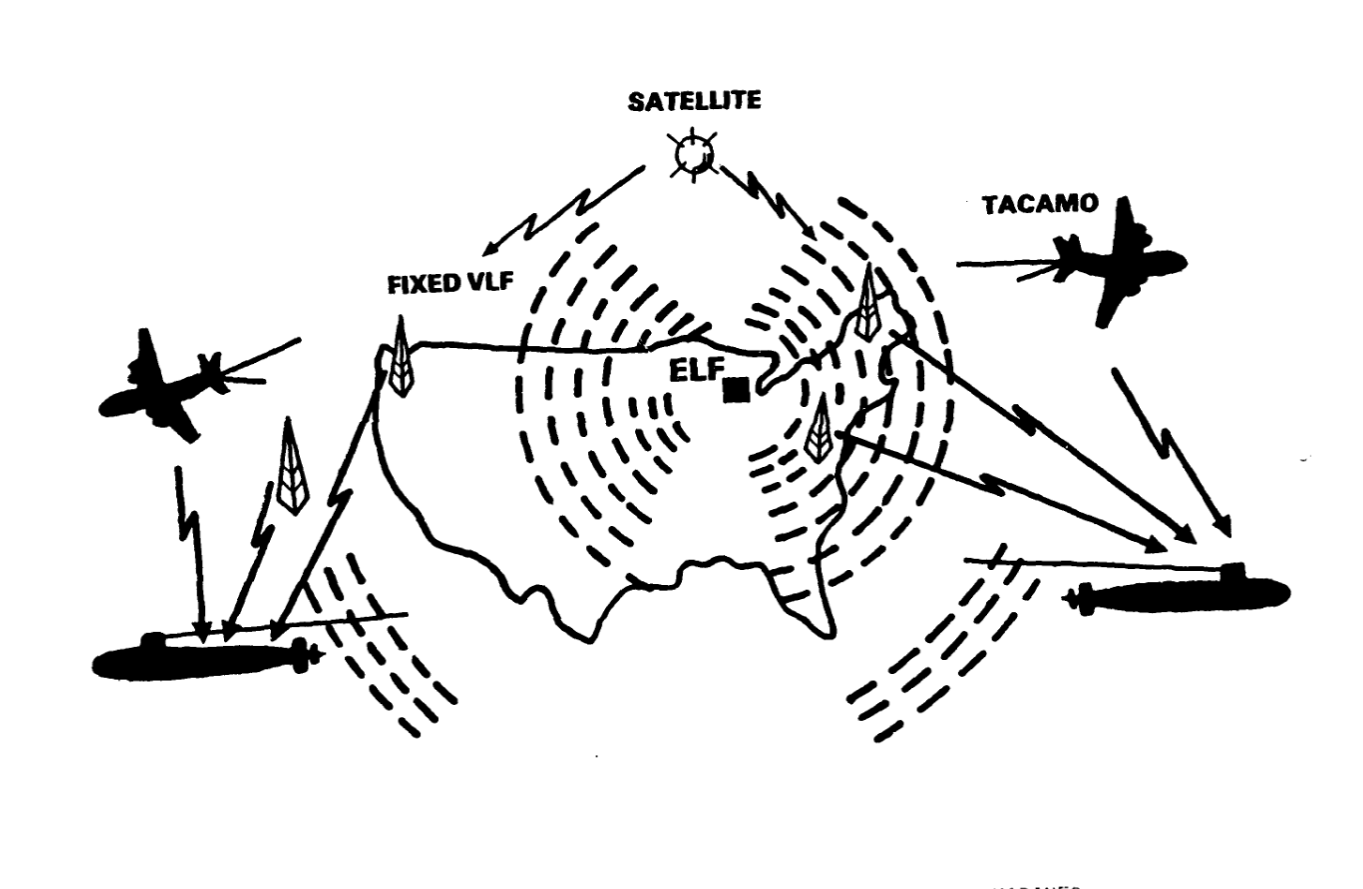
This whole problem with radio waves getting gobbled up by the ocean is why, even today, the military relies heavily on Extremely Low Frequencies (ELF) for submarine communication. Unlike higher frequencies that bounce off the ionosphere or get absorbed by water, ELF waves can penetrate seawater to a certain depth. Think of it like trying to send a whisper through a thick wall versus shouting. ELF is the shout, but it’s a very slow, low-bandwidth shout. You can’t send much data, and the antennas required are massive, often miles long, and laid on the seabed or towed by surface ships. It’s not exactly what you’d call a ‘real-time chat.’ It’s more like sending a postcard. A very, very, very delayed postcard.
Who’s Actually Making Money Here?
Follow the money, right? In the early days, it was the radio manufacturers – Marconi, and later, a host of others scrambling to equip navies. Today, the big defense contractors are still in the game, developing increasingly sophisticated (and expensive) systems. Companies working on advanced sonar, secure communications, and specialized undersea sensor technology. But the real money, the sustained gravy train, is in the infrastructure. Think the enormous research facilities, the specialized manufacturing plants, the decades-long maintenance contracts. It’s not just about building a better radio; it’s about building an entire ecosystem of undersea communication and detection, and that’s a very profitable business for the usual suspects in the defense industry. The irony? All this advanced tech, and they’re still wrestling with the same fundamental physics problems that frustrated Navy engineers a hundred years ago.
Is This a Solved Problem, or Just a Different Kind of Suck?
Officially, the Navy will tell you they have strong communication methods for submarines. And they do. Using ELF, VLF (Very Low Frequency), and acoustic signals, they can get messages down. But ‘strong’ doesn’t mean ‘easy’ or ‘instant.’ It means they’ve found ways to operate within severe limitations. The need to surface, the need for specialized buoys, the reliance on low-bandwidth ELF signals – these are all concessions to the physics of the ocean. It’s less a ‘solved problem’ and more a ‘managed annoyance.’ The core challenge remains: the ocean is a formidable, signal-blocking adversary. Every bit of progress is a hard-won battle against nature, and frankly, nature still seems to be winning more often than not.
What About the ‘Accidental Drop’ Story?
Ah, the legend of John Willoughby. Summer of 1917, Chesapeake Bay. He’s fiddling with coil antennas for receiver tests, and bam, drops one into the water. What happens next is where the story gets muddled by patent disputes. The claim is that this accidental dunk revealed something about how radio signals might propagate through seawater. Was it a genuine breakthrough? Was it just a footnote in a long series of experiments that eventually led to better antenna designs? The court said Willoughby and his National Bureau of Standards colleagues were the rightful inventors of a certain improvement. Regardless of the precise details, it’s a classic tale of serendipity in engineering – sometimes the biggest discoveries happen when you least expect them, usually when something breaks or falls into the drink.